

Trans vaginal mesh injuries are health problems that may occur after surgical mesh is placed through the vagina, particularly during procedures intended to treat pelvic organ prolapse. Surgical mesh has been used to provide additional support to weakened or damaged tissue. However, certain patients have experienced complications that can require additional medical care or surgery.
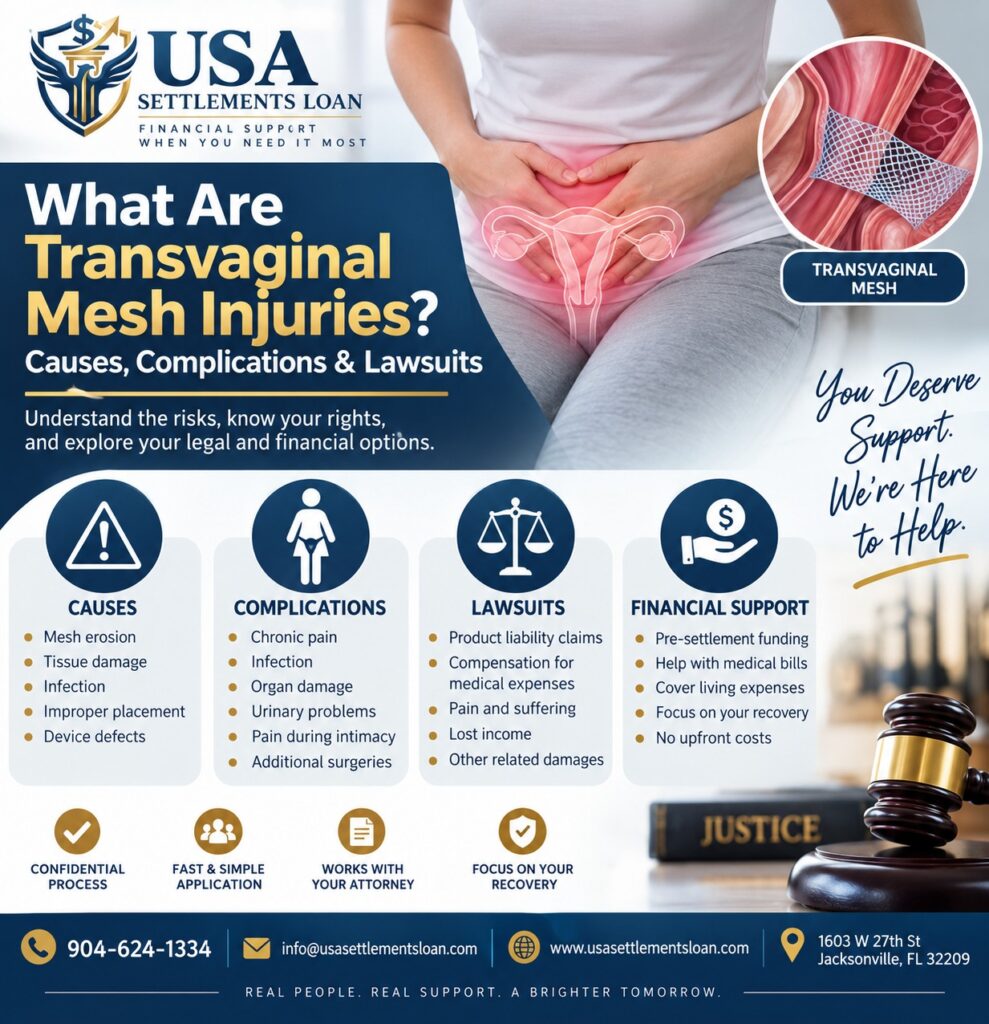
For individuals dealing with trans vaginal mesh injuries, understanding the potential causes, symptoms, complications, and legal considerations can be important. A person’s medical circumstances and legal options are unique, so anyone experiencing symptoms should discuss them with an appropriate healthcare professional and qualified attorney.
Why Was Trans vaginal Mesh Used?
Trans vaginal mesh was developed to reinforce weakened pelvic tissue and help address conditions such as pelvic organ prolapse. Pelvic organ prolapse occurs when the muscles and tissues supporting pelvic organs become weakened, allowing an organ to move from its normal position.
Depending on the procedure, surgical mesh could be placed to provide additional support. The FDA has distinguished between different types of urogynecologic mesh procedures because their risks and benefits are not necessarily the same.
In 2019, the FDA ordered manufacturers to stop selling and distributing certain surgical mesh products intended for transvaginal repair of pelvic organ prolapse after determining that the manufacturers had not demonstrated reasonable assurance of safety and effectiveness under the applicable standard.
Common Causes of Trans vaginal Mesh Injuries
Trans vaginal mesh injuries can involve different complications, and the specific cause may vary from one patient to another.
Potential contributing factors may include:
- Mesh erosion or exposure
- Infection following surgery
- Scar tissue formation
- Tissue damage
- Improper positioning or movement of the mesh
- Pain associated with the implant or surrounding tissue
- Injury involving nearby organs
- Complications arising during the surgical procedure
The FDA has reported complications associated with urogynecologic surgical mesh that include erosion, pain, infection, bleeding, incontinence, fistula, organ perforation, recurrent prolapse, abnormal discharge, bowel obstruction, and pain during sexual intercourse.
Not every patient who receives surgical mesh will experience these problems, and complications can also occur with pelvic surgery that does not involve mesh.
Symptoms of Transvaginal Mesh Injuries
Recognizing possible symptoms can help patients know when to seek medical attention. The FDA advises people who have had transvaginal mesh for pelvic organ prolapse to contact their healthcare provider if they develop symptoms such as persistent vaginal bleeding or discharge, pelvic or groin pain, or pain during sexual intercourse.
Possible warning signs may include:
- Persistent pelvic discomfort
- Vaginal bleeding or unusual discharge
- Pain during sexual intercourse
- Recurrent urinary problems
- Signs of infection
- Ongoing discomfort after surgery
- Symptoms associated with recurrent prolapse
Anyone experiencing concerning symptoms should obtain medical advice rather than assuming that a symptom is caused by mesh.
Complications Associated With Trans vaginal Mesh
Some trans vaginal mesh injuries can become serious and may require additional treatment. Mesh erosion, for example, occurs when mesh becomes exposed or moves into surrounding tissue. Depending on the circumstances, treatment may range from conservative care to an additional procedure or surgery.
Other possible complications include:
- Chronic or persistent pain
- Infection
- Bleeding
- Scar tissue
- Urinary problems
- Organ perforation
- Fistula
- Recurrent pelvic organ prolapse
- Bowel-related complications
The FDA notes that some mesh-related complications may require medical intervention, hospitalization, or surgical treatment.
Trans vaginal Mesh Injuries and Lawsuits
When someone believes a medical device caused an injury, they may want to explore whether they have a potential legal claim. Trans vaginal mesh injuries have been the subject of litigation, and individual cases can involve questions concerning the patient’s medical history, the particular device, alleged complications, treatment costs, and applicable law.
A potential claim may involve damages related to medical expenses, additional treatment, lost income, pain and suffering, and other losses depending on the circumstances and applicable law.
Important Steps for Potential Claimants
If you believe you have experienced a mesh-related injury, consider:
- Seek medical care for current or ongoing symptoms.
- Keep medical records related to your diagnosis and treatment.
- Identify the mesh device, if the information is available.
- Document expenses and lost income connected with the injury.
- Speak with a qualified attorney about your individual circumstances.
- Ask about applicable filing deadlines, which can vary depending on the jurisdiction and facts.
Legal eligibility should be determined by a qualified attorney rather than assumed from symptoms alone.
Can Pre-Settlement Funding Help With Financial Pressure?
A lawsuit can take time, while medical bills and everyday expenses may continue. For eligible claimants, pre-settlement funding may provide access to money before a qualifying case reaches a settlement or judgment.
Pre-settlement funding is generally structured around a pending legal claim, and approval depends on factors such as the case and the provider’s requirements. It is not a guarantee of a settlement and should not be viewed as a substitute for legal advice.
If you are considering funding, carefully review the agreement, costs, repayment terms, and other conditions before making a decision.
Frequently Asked Questions
1. What are trans vaginal mesh injuries?
Trans vaginal mesh injuries refer to complications or health problems that may occur after mesh is placed through the vagina during certain pelvic procedures. Possible problems include pain, erosion, infection, bleeding, and other complications.
2. Can trans vaginal mesh complications require surgery?
In some circumstances, complications may require additional medical treatment or surgery. The appropriate treatment depends on the patient’s condition and the nature of the complication.
3. Can I file a lawsuit for a trans vaginal mesh injury?
Potential legal claims depend on individual facts, applicable law, medical evidence, and filing deadlines. A qualified attorney can evaluate whether you may have a viable claim.
4. Can pre-settlement funding help with expenses?
Eligible plaintiffs with qualifying pending cases may be able to obtain pre-settlement funding to help address financial needs before their case resolves. Approval and terms vary, so applicants should review the agreement carefully.
Final Thoughts
Trans vaginal mesh injuries can involve complex medical and legal issues. Understanding potential complications and obtaining appropriate medical and legal guidance can help individuals make informed decisions about their circumstances. The FDA continues to provide information and monitor safety issues involving urogynecologic surgical mesh.
For individuals with a pending injury claim who are experiencing financial pressure, exploring available financial options may also be worthwhile. USA Settlements Loan can provide information about potential pre-settlement funding options for qualifying cases.
USA Settlements Loan
1603 W 27th St, Jacksonville, FL 32209
Phone: 904-624-1334
Email: info@usasettlementsloan.com